

AI infra, energy and record sales: David Gurlé's vision with Stéphanie Hospital behind the scenes of Silicon Carne with Carlos Diaz
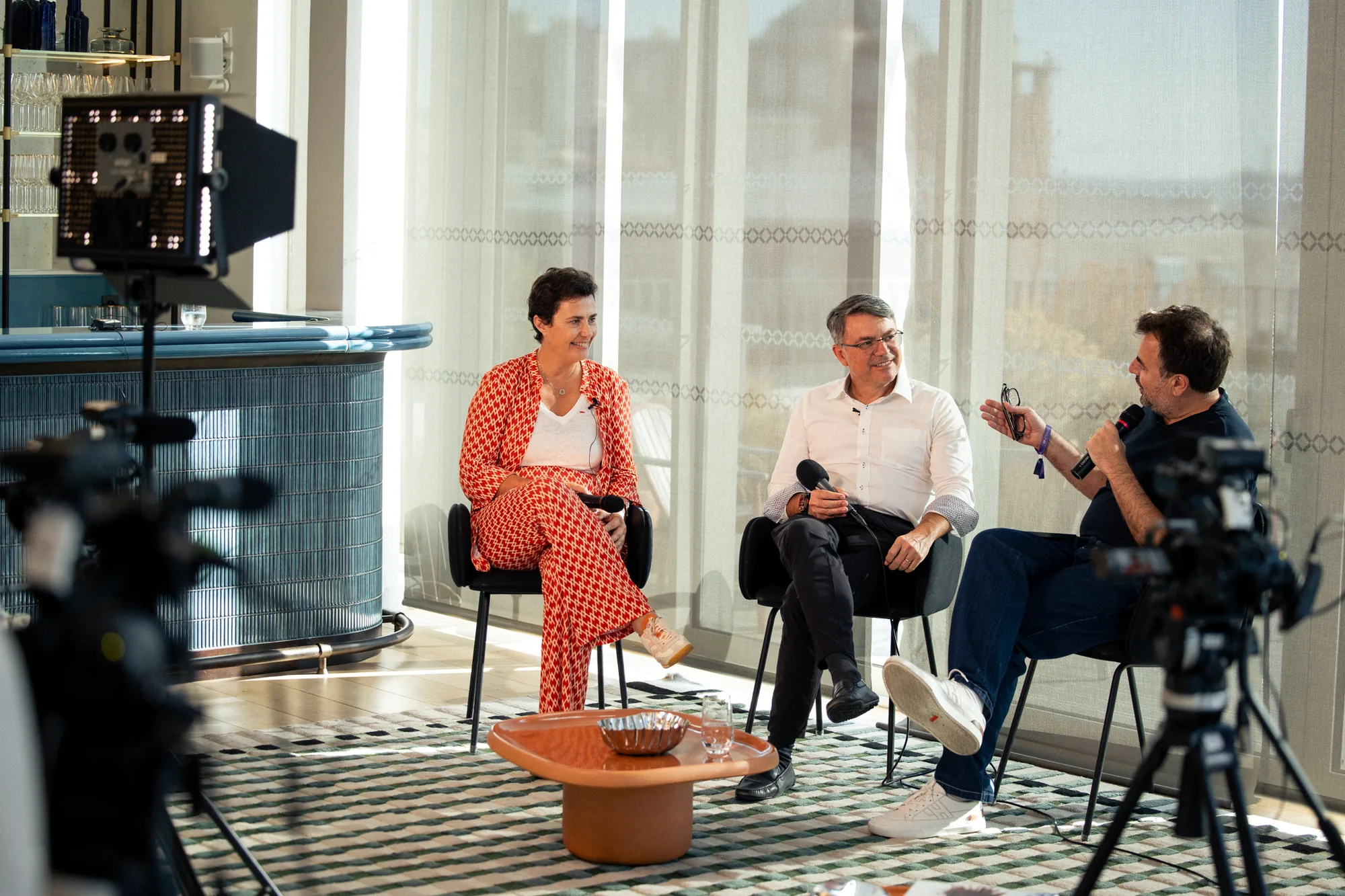
Cloud, computing power, sovereignty and energy: Europe has a historic opportunity to shape its own technology champions. In the latest episode of the Silicon Carne podcast, Carlos Diaz brought together Stéphanie Hospital, founder and CEO of OneRagtime, and David Gurlé, CEO of Antimatter. A fascinating discussion on the real constraint of AI, the role of capital-risque and the development of the first European distributed neo-cloud.
While the ecosystem's logiciel often prioritizes the size of levées de fonds over real performance, Antimatter demonstrates another path: that of growth supported by sales and direct funding by customers.
Here are the four key lessons from their discussion:
1. Back to basics: connecting computing directly to energy
Today, the acceleration of AI depends above all on fluid, stable and sober access to electricity. The industrial response driven by Antimatter is based on a virtuous paradigm shift: stop bringing electricity to the data center, and start bringing the data center directly to where energy is available. It is this principle of distributed cloud that makes it possible to offer sovereign, high-performance, and environmentally as well as financially optimal computing.
2. The transfer of value and sovereignty: beyond illusions
While open weight models are bringing the value of logiciel towards zero, strategic value is migrating to infrastructure and routing. To guarantee real European sovereignty, it is not enough to attract foreign investment whose capex immediately goes back to buying American GPUs. Thanks to its distributed architecture rooted on the continent, Antimatter guarantees total confidentiality, compliance and independence.
3. The birth of Antimatter: the union of three excellent areas of expertise supported from the start by OneRagtime
Our history with Antimatter began in July 2022, when OneRagtime invested from the start at the seed stage in Hivenet, which then wanted to develop an encrypted and secure file sharing solution based on a distributed architecture. We then led its Series A, which marked Hivenet's evolution towards compute and distributed cloud infrastructure. In April 2025, we continued this trajectory by investing from the start in PoliCloud, which specializes in sovereign computing and energy integration.
Antimatter was born from the strategic merger of Hivenet, PoliCloud and Data Factory, bringing together three complementary areas of expertise to build a sovereign, distributed computing infrastructure capable of deploying on a large scale.
4. Massive commercial momentum financed by customers
Today, the first European neo-cloud dedicated to AI inference boasts unprecedented industrial capabilities:
708 GPUs and 42 MW in production distributed across 6 sites and 7 PoliCloud units,
More than 500,000 active cloud users,
An energy access pipeline under contract exceeding 1 gigawatt.
The future of infrastructure is not written through press releases about levées de fonds, but by the signing of large-scale contracts. Antimatter relies on a solid model driven by concrete sales:
A framework agreement of €580M already signed with CloudGridEnergy.
A outlook to reach €1 billion in framework sales by the end of the year.
The deployment of 420 PoliCloud units by 2027
And this is only the beginning. 🚀🚀
🎥 Watch the full episode
How are priority access to energy and data sovereignty for AI organized in Europe? What are the value-creating financial models for our ecosystem?
Discover the entirety of this great discussion between Stéphanie Hospital, Carlos Diaz and David Gurlé in this episode of Silicon Carne:
👉 Watch the episode on YouTube